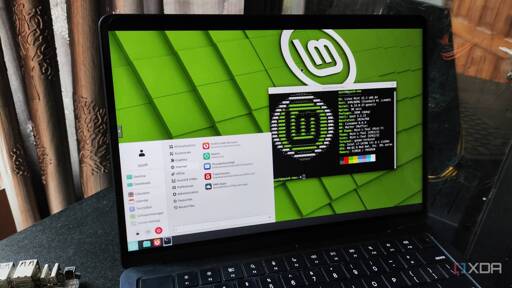
I don’t recall Ubuntu being a lightweight distro or ever aiming to be. It was always Debian with more stuff.
yep, user friendly, easy install, gooey install, proprietary drivers; extra stuff.
i think they were aiming to loss lead, capture user base and ultimately get some b2b sales - oh well :( OP author even ignores stuff like Lubuntu and Xubuntu, which i assume canonical have at least some contribution to. OP gets downvote from me, worthless article.
You can tell the author hasn’t spent much time in the Linux world.
stopped
It never was.
Ubuntu used to be the obvious choice for reviving old systems that couldn’t run Windows
It didn’t.
Whether xfce and cinnamon require less resources compared to other DEs is questionable, but the question itself is dumb. Environmemt by itself has little value without programs that run inside of it, and most of those aren’t cinnamon or xfce specific or adapted to them.
Ubuntu used to be the obvious choice for reviving old systems that couldn’t run WindowsIt didn’t.
It was though. You are living in a bubble. For five years all I ever heard was “You gotta switch to Ubuntu! Windows is awful!” Except this is when I was still using Windows XP, so from my perspective Windows wasn’t awful. It was just out of date. From 2006-2011, that’s all I ever heard was Ubuntu Ubuntu Ubuntu.
Finally I looked at Ubuntu, and instantly realized I hated it, but that’s because of personal choice. For the masses, Ubuntu=Linux at one point. If you knew enough to dispute that fact, then you’re already in the Linux ecosystem enough to have your own opinions.
But for non-Linux people, I’d say Ubuntu was the default Linux experience for most people for 15ish years. I’d say around 3-4 years ago it started shifting towards Mint.
And now Mint is the default experience. The problem is Linux users are very opinionated. Their distro is the best distro. Their distro “just works”. And these opinions are on a spectrum. I don’t mean autism, I mean the opinions are literally a whole spectrum. You could have someone who has almost an identical set-up as you, except they use a different file browser. So, slightly differrent. On the other end of the spectrum you might have someone who uses Arch. Or if you use Arch, maybe they use vanilla Debian.
Whatever the specifics, that’s not the point. The point is Linux is a whole range of visions, which is why your vision will never be THE vision for Linux. Because regardless of your opinions, no matter which stance you take, there’s going to be thousands of people who want to tell you how stupid your setup is, and how much better theirs is.
But the default Linux experience is just the one that the majority gravitate towards. 90% of normal PC users never change any settings, or try different distros. The difference is that most Linux users aren’t the typical PC users. Linux users like to customize their PC. Most PC users don’t even change the theme. That’s why Windows has such a monopoly. The user buys their PC, plop it on their desk, and the factory settings are good enough.
The other thing I find most Linux users do, is they want to grow the Linux base. So they introduce the “easiest” distro, and that becomes the default. For a very long time that was Ubuntu. I actually like Mint, so I personally see this as a good step for being the default.
And if you don’t believe that there are users who don’t change their PC or customize things, I’m running ZorinOS, as my first Linux full time use case. The only thing I customized was putting a custom taskbar at the bottom of my screen. Outside of that, my PC hasn’t been updated, or changed in any way since 2023.
And if all of this sounds like horror to you, then that just means you have opinions that I don’t have. But you’re also one of the advanced PC users who use linux easily. I still struggle with this. If Windows wasn’t one massive privacy invasion, I’d still be on Windows despite all the things you hate about them. For me it was the spying. Linux just does it’s thing, and isn’t controlled by corporations, so it doesn’t spy. That’s literally the only difference for me. I don’t even update firefox. I’m running 133.0.3. I think firefox is somewhere near version 200.
I think you’re both interpreting the original quote in different ways. It was the obvious choice only because it was popular, but it wasn’t popular because it was the best at reviving old hardware. There were many better options for squeezing performance out of old systems, and they would have been more “obvious choices” than Ubuntu for anyone with any knowledge of the Linux ecosystem.
Came here to say this bit you said it better.
For five years all I ever heard was . . .
Are you sure you know who it is in the bubble?
I dunno where you live but when i hear the same thing three times, i usually try to move my ears a bit.
Living in a bubble refers to a situation where a person is isolated from different ideas or experiences, often surrounding themselves only with like-minded individuals and avoiding exposure to diverse perspectives.
In context they should be sure, because they’re right.
There was a period where, if you went looking for a “lightweight” Linux distribution as a layperson, everything pointed to Ubuntu. Actually, that period saw Linux and Ubuntu be synonymous to those same laypeople.
It was one of the popular new flavors of the time but anybody who knew to dig deeper would’ve easily found Mint recommended as a truly lightweight distro.
Maybe Xubuntu or preferably Lubuntu, but never Ubuntu.
I’d even have a hard time saying Linux Mint is going to be lightweight.
Lubuntu definitely seems about the lightest weight desktop environment for it for sure. I suppose Ubuntu server can be pretty light… But so are most linux servers, that’s kind of their selling point.
More like Ubuntu was the beginner friendly distro and Mint has taken that place years ago, right?
clear debian is the solution
Not for modern hardware from my experience. Instead of suggesting one distribution, I would say Debian for some old hardware models and fedora is the sweet spot for modern hardware.
Ubuntu used to be even more demanding with Unity. I love Mint though. Been installing it a lot lately
Any Linux distribution based on KDE or GNOME is not going to be lightweight. It did have the LXDE option for stripping it back somewhat, but the repos were still mostly filled with software that requires KDE or GNOME.
Mint is kind of like LxUbuntu back in the early days; still no lightweight, not even by desktop standards, but it’ll bloat up quickly if you want to get anything done with it.
I mean, Puppy Linux and DSL are still around. Anything based on Debian could claim to be stable or enterprise ready, but not lightweight.
I feel like this was true maybe 10-20 years ago, but any semi-recent desktop or laptop can run KDE or Gnome fine. If you are running an SBC with limited RAM, then maybe you should look at another desktop GUI.
Any semi-recent desktop or laptop has no need of a lightweight Linux. That’s for embedded solutions, rPis, and other resource constrained systems.
Having said that, in 2026 and going forward, we may have need of lightweight desktop distributions again. 64GB storage, 4GB RAM style.
#! was, and still is, where it’s at. There is even still a 32-bit x86 version.
The distro that hasn’t seen an update in 13 years, according to Wikipedia?
There are a couple continuations of it, up to date. You’ll have to use a previous version for i386 though as Debian upstream dropped it as a target.