I paid $100 for a massive 1TB hard drive when they first came out years ago. Thought a TB was essentially unlimited and wasn’t sure if it could ever be used.
What a crazy advancement to get to 8TB the size of your pinky nail.
I paid like $150 for a 1GB hard drive on my Toshiba Tecra 510CDT back in the 90s. The guys at the computer store weren’t sure if it would even work.
You’re only getting 4 TB the size of your pinky nail. 8TB is the size of your thumbnail. Most people can’t be arsed to read the article, but you couldn’t even read the headline?
More like big toe nail for the 8 TB.
Yall have big digits
1TB may have seemed unlimited back then, but now with 8TB, if an uncompressed Blu-Ray is around 50GB, that can fit 160 Blu-Ray movies. Now, 160 movies may seem like a lot, and it is, but think of how many movies there have been overall over time.
You can never have enough storage.
Our first family PC had a 1,3 gigabyte drive. That had Win ‘95 on it, productivity apps, bunch of games, etc. This was a time when you could actually still run games off CD-ROM’s without needing installs.
These days, my phone has over 200 times the memory. It’s still amazing to me.
Same thing with SD cards. When I started with digital photography, a 32 MB card was big. My current camera takes images that are too large to fit on it! Early cameras even had floppy disk storage, if you can imagine…
I think our first family PC had 40MB of storage, and we loaded optical discs into a caddy before inserting them. That was in the late 80s.
It gets even wilder when you tell younger people that PC’s didn’t even come with storage drives in the early days. One of the earliest I used had to have software loaded through cassette tape. That was certainly a bit annoying, as it took quite a while and was error prone.
These days I somewhat collect old hardware. I love things like my Macintosh Plus where you need to juggle disks in order to load software in the memory so you can use it. Nowadays a single text e-mail outweighs the entire OS for a system like that.
Why would someone wanting to store huge amounts of data to put it on a storage device that is the most fragile/short lived?
short term storage of uncompressed high resolution data
I don’t think microSD has the write speed for that, might be more useful for HD surveillance cameras
Uncompressed 4k stream @ 30fps and 24bpp would be 5.7 GB/s. The top regular SD card speed, UHS-III, maxes at 0.6 GB/s. SD Express, where a PCIe lane is added, goes to 3.9 GB/s.
So, yeah, going to need at least some compression. Good news is that just a little compression can go a long way.
Even full 4K HDR Blu-ray rips come in at about 30GB an hour.
That’s 500MB per minute which just about fits in the 10MB/s of UHS Class 1.
I would consider those fairly standard these days. You’d have to have picked an extra shitty AliExpress special to not have your card meet that.
Yeah pictures and videos is all I can think of. I am no photophile but I assume some small digital camera benefits from storage of the micro variety. Has me thinking of the 2015 movie Victoria, 140m straight, one shot, no cuts, and actually a good movie, pretty amazing stuff.
Games, the easiest way to expand the storage on a Steam Deck is a micro sd card.
SD card is limited to 100MB/s iirc.
It may be simplest, but it’s far from ideal.
Given some reviews I’ve seen, it’s more than good enough for games. Loading times may be a bit longer, but not that bad. HDDs are in that range, and plenty of people use HDDs for gaming.
I can’t even imagine going back to an HDD for gaming.
I was recently given a laptop to check and make sure there was no info on it before disposal, and it took so long to boot into Windows and get into a usable state, I legit thought it was faulty.
And the worst thing was, that was a fresh install. Somebody had already cleared it.
Games are just so stupidly big now. They’re pushing 200GB. To fill 16GB RAM from SD (and not all games load that much) would take 3 minutes. The SSD can do that in about 6 seconds.
Why would anyone need a 24TB HDD?
Because in the time we have gone from 4GB SD cards to 4TB cards, movies have gone from being 700MB to 70Gb, and games from coming on a few cds or dvds to requiring a mountain of them - Baldurs Gate 1 came on 5 CDs, BG3 would require around 200 of them.That 4TB card has only space for 26 games, if they are as large as BG3.
The original Baldur’s Gate came on a single CD and had full install size of under 600MB. It was also possible to do a partial install and to load files off the CD at runtime.
An uncompressed CD audio soundtrack, maybe?
(I’m not familiar with Baldur’s Gate in particular, but I do remember some '90s games being like that.)
In this case, the question was rhetorical - the original release of BG1 takes 5 CDs, and the sixth is the Tales of the Sword Coast expansion. Installed the game takes around 2.8GB IIRC. They did eventually re-release it as only a 3 CD set because they could cram more data on a single CD by then.
You could do that with a lot of PS1 games. The first track was data, the rest were just regular CD audio tracks.
This got rarer later on, once they realised the could fill the discs with FMV sequences instead.
Last I remember, Baldurs Gate was on 6 separate discs, but I haven’t installed it from those in probably 20 years.
Steam deck
Right, the 1Tb of internal storage and the 1Tb SD card is still really cramped if you play a lot of games
Video Cameras
Sneakernet. There’s places that don’t have access to get l good Internet and relatively inexpensive storage like this allows them to buy and trade media and consume it on inexpensive devices like a cellphone.
They’re awesome for modding iPods, though my music library’s probably less than 1 gb.
All I want is higher resiliency SD cards. It must be a technology limitation with being unable to fit a good controller in there or something because I would gladly sacrifice speed and capacity for something reliable in a lot of my applications.
What SD cards are you buying, and where are you using them?
I’ve been using a 256gb Sandisk high endurance SD card in my dashcam since 2021 (when I lost the first 2 I’d bought in 2018) and it’s still perfectly content writing a 4k + 1080p video for about 16 hours straight every single day. It wasn’t until last year I got a 512gb Samsung Pro Plus drive to split the load/act as a backup.
Sigh…
A couple of years ago there were discussions on how stupid 20+tb harddrives were, mainly because they are so slow that the time it takes for files to transfer to a spinning disk was too long.
Let’s say you have a good 20tb drive and it can transfer files at 200MB/s. To fill that drive, it’ll take 1 day and 8 hours of continuous transfer. If it’s failing, and you’re trying to get as much off of it you’re screwed.
Now let’s think about that micro SD card. It’s 4tb, and let’s be gracious and give it a v90 speed class. That’s 90MB/s. Looking at a calculation for the time it takes to fill it up, we’re sitting at about 14h and 14 minutes. Worst part is that SD cards don’t have SMART, meaning you don’t know when they’ll die.
From my experience, even good SD cards die in my raspberry pi running pihole, and the cards runs idle almost all the time.
Also there’s this thing that the higher capacity a storage device gets, the more valueable the data stored on it becomes, not directly because it’s high capacity, but because it’s more trusted by the user.
Guys, gals and anyone in between, please get a proper storage solution, something that won’t fail spontaneously. If you need that kind of capacity, go for a Nas with spare drives, or at least get an ssd.
/end rant
Not all use-cases require a high speed:capacity ratio.
I mean, I have an 18TB USB hard drive, which sustains transfer at about 50MB/sec in practice. It is nearly full, and its level of performance has never been a show-stopping problem.
It’s hard to imagine a use case where a NAS would be a viable alternative to an SD card.
I’ve had a usage tier for storage that looks like this
Temporary storage
- SD cards - unreliable storage you use temporarily to store pictures and videos before inevitably moving them to a more reliable and permanent solution.
- USB drives (hdd ssd etc) - used for when you you want to move files faster or more conveniently than over a Lan.
Permanent storage
- Nas, internal drives, tape drives, etc - for when you want to store a lot of data with configurations that allow you to use redundancy.
The issue with super high capacity SD cards for me is that they’re still fragile and prone to failure. When you allow someone to store that much data, it’ll be used as a more permanent medium, and since it has a lot of storage capacity you end up with a bigger data loss when it dies. Imo having 30 128gb SD cards would be better because if one dies or breaks, you lose 128gb and not 4tb.
Tldr I think 4tb micro sd cards are stupid.
The raspberry pi is about the worst case scenario for SD cards. It may be idle, but an operating system is still making constant reads and writes, which absolutely eat through an SD card
There is a thing called Log2Ram that can help with it for Pis. I run it in my PiHoles
I’ve had better luck with pro extreme cards made for dash cams, etc.
Worst part is that SD cards don’t have SMART, meaning you don’t know when they’ll die.
I mean, SMART doesn’t help much with knowing about HDDs’ death either. It’s more often they don’t show up at all, so you can’t even check SMART.
It’s not about the death. It’s about if it’s going to die. I’ve seen smart errors weeks before a hdd died which gave me time to back that data up.
This is obviously not for large scale storage. But for stuff like cameras, which uses ever larger files for raw images
I totally get that… Here’s the thing though, at least in Norway a 1tb micro sd card costs 2200kr (~$203). If we extrapolate the price for a 4tb one, that’ll be 8800kr(~$813). If you or a company has the kind of money to spend almost a grand on a storage device, doesn’t that mean that the footage/photos are pretty valuable? If you had the kind of money/were going to record super valuable footage, wouldn’t you work hard to use cameras/recording systems that were capable of recording to redundant drives?
What I don’t get is what market section this product would even fit in. It’s too expensive for regular consumers, and also has terrible value. It’s not good enough for professional settings because it has no drive monitoring, nor does it have redundancy. It isn’t fast enough for the kind of footage that would require that kind of space(unless you’re recording a month long realtime video).
Also imagine how horrible the transfer speeds would be for individual photos when the os has to initiate a file transfer. If we say each photo is 20mb, that’s almost 200k photos. Yikes…
No one is using SD cards for data storage, I hope.
I mean, it’s where I keep all of my important tax documents in pdf and my old family videos. It’s plugged in this here chromebook. Haven’t needed to take it out since I got the thing during a sale for $160. The chromebook that is. I don’t remember what 16Gb cost back then.
This reads like a joke, but trails off like it’s sincere…I don’t know if I should be concerned…
Please for the love of got put that somewhere else.
This is the kind of discussion i’m here for. Thanks everyone! I didn’t know SD and micro SD cards where this unreliable but i always use them for short term stuff or content that is backed up somewhere else so i think i’m good.
They aren’t that unreliable FWIW. Obviously, it should not be your only copy of media, but I have microSD cards that are still readable with data intact even 10, 11, or more years later.
I feel it’s worth mentioning the application of them also factors into their longevity.
Good quality SD card holding some documents and random files? Yeah probably 10+ years. Good quality SD card being used in a dashcam, constant writes? I’m replacing my good SD card after about ~2 years of service because its showing signs of failure.
True. It’s all about the application.
deleted by creator
The micro SD is 4 TB. Only the full sized SD is 8.
Yeah but in 2-3 years I’m sure they will have an 8 tb micro SD out
ah finally, i can buy a micro sd card for 500 dollars, the same price as a gazillion terabyte harddrive, and get less reliability out of it.
yeah, but you can carry it with you at all times if your phone takes an SD card.
although, can they use one that large, or is there some restriction?
I think most phones have a 1tb cap … But nowadays most phones don’t have SD card slots so I don’t know where that has gone
I’d say it depends on the phone.
and both are described as SDUC UHS-I cards that are “built for tomorrow’s smartphones, gaming devices, drones, cameras, and laptops.”
Gaming devices: ✅️
Drones: ✅️
Cameras: ✅️
Smartphones: ❌️Basically every current flagship phone, and you know that’s what they mean, has done away with expandable memory…
Which is utter bullshit. Especially since a lot of lower end phones have the option for dual sim or one sim and sd. There is literally no reason for flagships to not have that and make file transfering easier.
But then how will they upcharge you for additional storage or push you to their monthly cloud storage solution?
Exactly. I forgot to write valid reason.
Or a headphone jack, yes, a large number of people have wireless earbuds…but the audio quality off them isn’t amazing, and goddammit I wanna plug my really nice headphones in, or connect to a stereo without needing to use a Bluetooth dongle or…or…fuck…idk…just stupid. The big players saw apple cutting all that away(barring expandable memory, they never had that as far as I know) and said fuck what people want, apple can dictate what their customers want, and we want to too! And then getting a device with enough on-board storage is hundreds of extra capitalism tokens. It’s a fuckin mess…
I still have an S9 with notification LED and expandable storage. I recently upgraded the SD card to 512gb.
I live in fear of this phone dying, and me having to get something disappointing to replace it.
Honestly, you can’t really compare the modern phone memory vs sd card memory anymore.
For pure storage ya, it doesn’t really matter. For using it for anything more than that, it’s honestly too slow.
UFS 4.0 Sequential Read Speed: Up to 4,200 MB/s Sequential Write Speed: Up to 2,800 MB/s Latency: Very low, making it ideal for high-speed data transfer and multitasking in mobile devices. Usage: Commonly used in high-end smartphones, tablets, and other mobile devices where speed and efficiency are critical.
SDUC UHS-I Sequential Read Speed: Up to 104 MB/s Sequential Write Speed: Typically around 70-90 MB/s, though the maximum theoretical speed can go up to 104 MB/s. Latency: Higher compared to UFS 4.0, which can impact performance in tasks requiring quick access to data. Usage: Used primarily in SD cards, which are common in cameras, drones, and other devices requiring expandable storage.
Just need to set them up in a raid configuration for redundancy.
Redunda-what?
The only RAID is Zero.
I am slightly confused why they use UHS-I instead of UHS-II (or even UHS-III) for such a big capacity. Seems like people needing so much capacity probably write a lot of data in a short time. UHS-II is 3 times quicker.
Then again maybe they are aiming for devices that can’t even run UHS-II
Could be a trade-off issue. They can get capacity or speed but not both yet.
Or it’s cost-prohibitive ATM. As in, they could get both, but you’d pay a ton for it.
I can imagine this being useful for cases where you write a lot of data over a longer time period. Think CCTV (with low-medium resolution). You can keep a sizeable archive locally and never have to swap cards
Oh yeah cctv could be a good option indeed.
I assume larger capacity means longer endurance, too, since you’re not constantly rewriting the same cells.
It’s SanDisk, I expect the opposite - that every cell increases the volatility and chance of catastrophic failure.
At this size you could carry your backup with you all the time or store it in your car encrypted.
Awesome,
but I wonder if we’ll ever get better read and write counts on SD cards. It feels like the size is getting larger than the amount of possible writes to the device, making it kind of moot.
SDUC supports up to one hundred and twenty eight Terabytes O.o
Who in the world requires so much Storage on a tiny SD card?!
Steamdeck game library
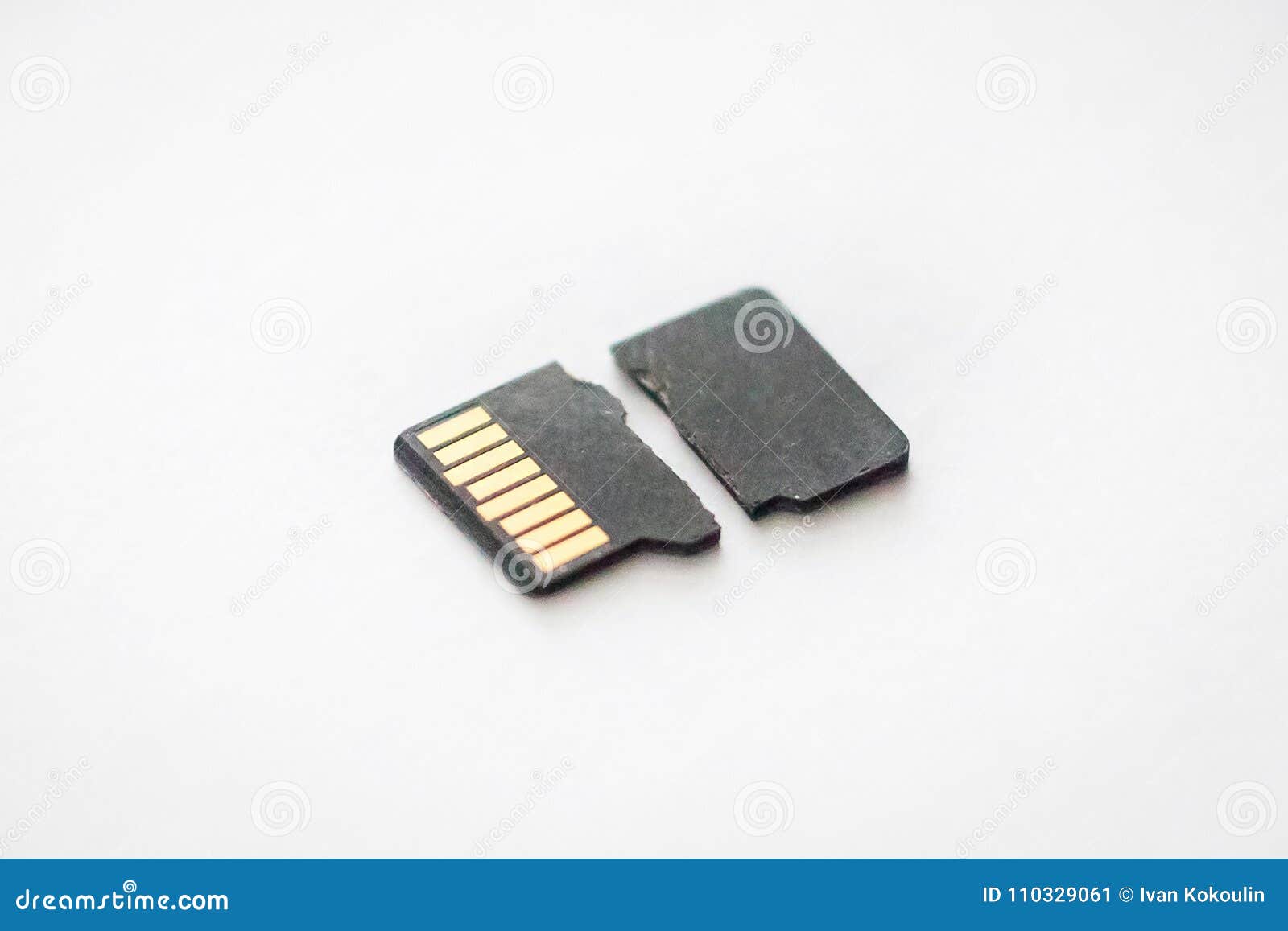
I don’t get it
When people disassemble their steam deck for the first time, they often forget to pull out their expensive micro sd, and it gets cracked by Steam deck body in half
Oof. Thank you for explaining.
Deck gang rise up

Luckily there is a m.2 slot in the deck 😉
And in general as well, does it make more sense to use m.2 Type-2230 SSD instead of SD cards, these days. Way faster and way more robust.
Not really super feasible for the average user to crack apart the plastic casing and reformat the new m.2 slot (since there is only one) with a new SteamOS partition.
I think you’ll find 95% of all steam deck users will prefer popping in a microsd than ripping apart their deck and formatting/transferring in a new internal drive.
That’s a lot of games/applications then, is the card reader fast enough though?

I want all my music on my phone, not just a pithy 80,000 songs.
node_modulesPeople who want a Raspberry Pi NAS without having to buy a hat?
I wish I could trust SD cards enough to use one on my Pi NAS… I just snagged a 5TB* external HDD.
Five… gigs?
Oooo thank you. Brain broken today. Five gigs is the average movie size hahaha
Pathetic.
Look, some people may have a porn collection that they need to backup and store “about their person” and this is the ideal way to do that.
Don’t be kink shaming.
What would anybody even use 4 TB SD card for? Storing a shit-ton of pirated movies that you can watch on your phone? Aside from that I have no idea. 256 gigs is probably more than enough for anything a normal user would do on a phone.
pirated
It’s not pirating if you own a physical copy like DVD or Blu-ray, it’s fair use. Fuck the studios for trying to take that away from us.
The target use case for large SD cards is high-resolution video recording.
Recording at 4k+ eats up space faaaaast. So you need both large-capacity as well as fast storage.
I have a convertible laptop with a MicroSD slot. A 4TB card would be great for backups.
File size is a major limiting factor in high speed video and to a lesser extent convenient ultra HD digital film. At 3840x2160 (basic 4k) uncompressed 10-bit video 1 frame is about 250 MB. An hour of footage at 30 fps then is about half a terabyte. At “only” 1000 fps you would burn through an 8 TB SD card in… 32 seconds.
Uncompressed video footage eats up storage extremely fast.
I feel like this is a product looking for a market. Why would anyone ever trust that much data to something so fragile and easy to lose?
I use a 2tb (iirc) in my steam deck. Perfect application for that… Low rewrites, but totally expendable/replaceable data.
4k Drones, upgradeable phones, DLSR cameras, Data per weight etc.
I own a 1tb ssd for my Steam Deck, literally 0 complaints, runs real fast, can’t feel any heat, never need to take it out other than if I’m factory resetting, it’s perfect! (though Valves next deck should just have a bigger ssd slot)
I’d love them for my dash cam if they were affordable. My camera records in front and behind of my van in 4k, so that’s 90-100 gigs an hour. I leave it running as a surveillance camera when I’m parked, so just going to work and back in one day would use over a terabyte.
Why would you continuously record? Just record motion events and you won’t need a card that large at all, plus it will last a lot longer.
They’re not for long term storage, they’re for transient storage like photography, in particular stuff like surveillance cameras
if you want long term CCTV setup properly you should be using ethernet connected security cameras and then transmitting it back to a central server with a hdd always recording. It’s much more reliable and way more cost effective, just requires you running an ethernet cable to where the camera is.
Filming 8K in a raw format maybe? (a lot of cameras only have an SD card slot, or only the sd card slot is fast enough to record raw at higher resolutions)
You probably wouldn’t need to take it out of the camera either? so the form factor wouldn’t be major concern.
Also could be handy for smuggling banned movies/tv shows into authoritarian countries that block or outlaw unauthorised VPNs?
It’s only 104 MB/s. Not enough for RAW video.