

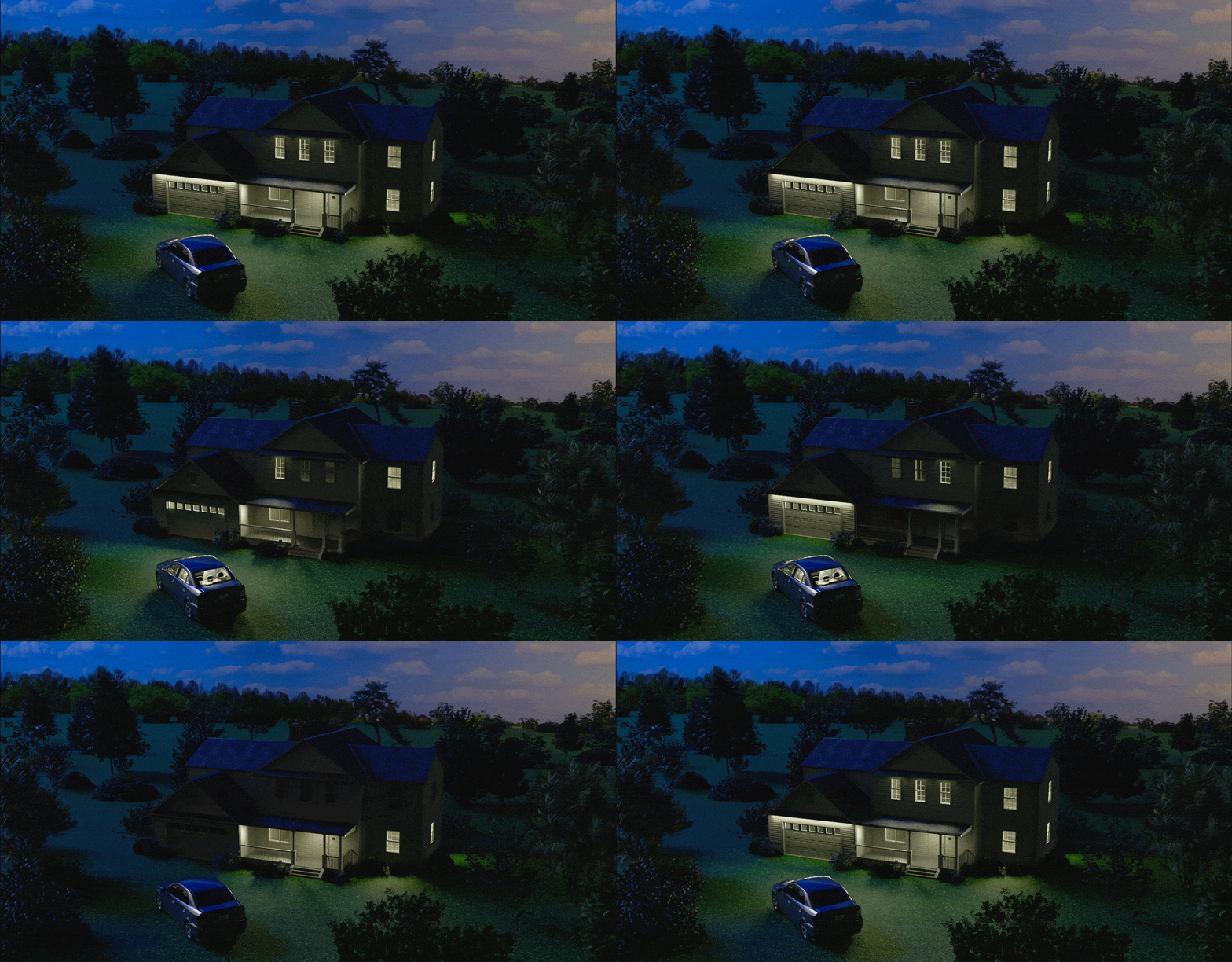
My folks are visiting me in Southern California for a couple of months, so I rented them a house down the street. The place is new construction, modern and sleek. Rentals tend to be shabby and worn-out, so choosing a home with the latest and greatest felt like a way to make the experience hassle-free.
All of the appliances and systems are brand-new: the HVAC, the lighting, the entertainment. Touch screens of various shapes and sizes control this, that, and the other. Rows of programmable buttons sit where traditional light switches would normally be. The kitchen even has outlets designed to rise up from the countertop when you need them, and slide away when you don’t.
It’s all state-of-the-art. And it’s terrible.
I’m no Luddite. I run a software company! I see the allure of high-tech gadgets and have fallen for their promises before. When my wife and I built a house more than a decade ago, we opted for all kinds of automated systems: low-voltage controls, mechanized blinds, irrigation systems that measure rain so the sprinklers come on only when you need them. We regretted it almost immediately. What we discovered is that this stuff requires setup, which can take more time than just doing things manually, and is maddeningly glitchy, forcing you to pay someone handsomely by the visit or the hour to fix your appliances for you.
Tech makes many things better, but you shouldn’t have to learn how to use a house. You shouldn’t need a tech tour and an app (or five) to turn the heat down or clean the dishes. You shouldn’t have to worry that pressing the wrong button will set off a chain of events you don’t know how to undo. All these powerful processors and thousands of lines of code have succeeded in making everyday things slower, harder to use, and less reliable than they used to be.
What goalposts? I directly responded to the fact you said that 100% of smart devices are trash. That’s a false statement. Plenty of smart devices exist that meet your criteria, and even if they don’t you can make them yourself.