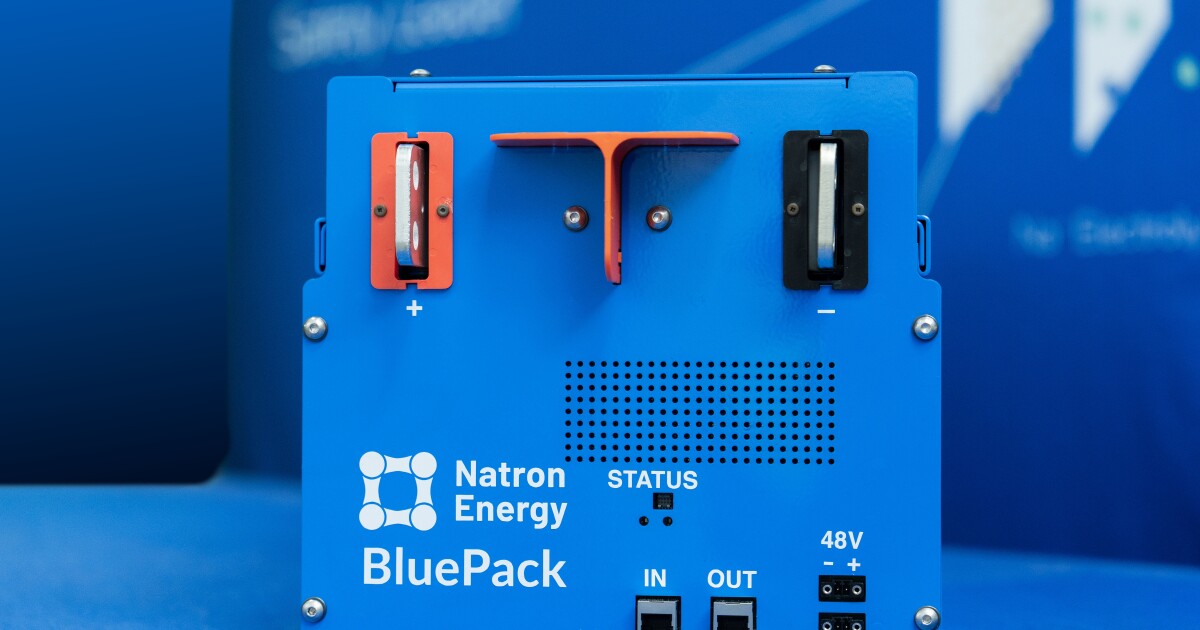
Two years ago, sodium-ion battery pioneer Natron Energy was busy preparing its specially formulated sodium batteries for mass production. The company slipped a little past its 2023 kickoff plans, but it didn't fall too far behind as far as mass battery production goes. It officially commenced…


Well, only relatively.
In order to work batteries need to have a certain amount of instability built in, on a chemical level. Them electrons have to want to jump from one material to a more reactive one; there is literally no other way. There is no such thing as a truly “safe and stable” battery chemistry. Such a battery would be inert, and not able to hold a charge. Even carbon-zinc batteries are technically flammable. I think these guys are stretching the truth a little for the layman, or possibly for the investor.
Lithium in current lithium-whatever cells is very reactive. Sodium on its own is extremely reactive, even moreso than lithium. Based on the minimal lookup I just did, this company appears to be using an aqueous electrolyte which makes sodium-ion cells a little safer (albeit at the cost of lower energy density, actually) but the notion that a lithium chemistry battery will burn but a sodium chemistry one “won’t” is flat out wrong. Further, shorting a battery pack of either chemistry is not likely to result in a good day.
If you poke a hole in it, is it just as exciting as lithium?
You who are so wise in the ways of science, can you explain to me if this is safe/will be super dangerous if exposed to water? Doesn’t sodium, like, blow the fuck up when it comes in contact with water?
Yeah throwing a piece of sodium metal into water will cause a violent reaction. Even touching it with your finger is bad because of the moisture on your skin.
But sodium chloride (table salt) dissolves in water easily and safely, resulting in an aqueous solution including sodium ions.