The tech costs more than conventional options upfront, but federal tax credits, new 120V models and strong savings have made them more appealing than ever.
If I ever get a house (millennial lol) I’d want to have a tankless water heater. That way supply meets demand exactly.
Tankless is crazy LESS energy efficient than a tank heat pump water heater. Why? In tankless you’re having to CREATE THE HEAT. With heat pump tank you don’t. You’re citing the inefficiency of storing a tank of hot water, but the insulation on a decent (not garbage) hot water heater is really really good! The heat loss through the insulation is VERY small. You could turn off the water heater entirely and come back days or possibly weeks later and the water is still hot.
As older millennial too who has worked on the house allot this is true, pilot been off while working on shit and can still get a few hot showers in for days of sparing use with water in that tank even if the heat source was stone dead.
I assume that the person above is referring to a natural gas tank system and not a heat pump tank system.
That all being said, this is something that the department of energy has studied. Depending upon household use, a tankless option can be much more energy efficient.
Here is a gas tank system compared to a gas tankless
It’s even more efficient to produce hot water at the point of use with a water heating fixture than a centralized water heater. There is no energy loss in storage or a lengthy journey through pipes (which are also usually uninsulated), and you can also directly heat water to the temperature you want instead of wasting energy mixing hot and cold water to cool it back down. You also get truly instant hot water with them. They’re fairly common in Europe and Asia which have 240v electricity (also because a lot of those homes predate mass availability and adoption of domestic hot water in the region so they had to retrofit). Sadly the North American electrical system is too dinky to handle that.
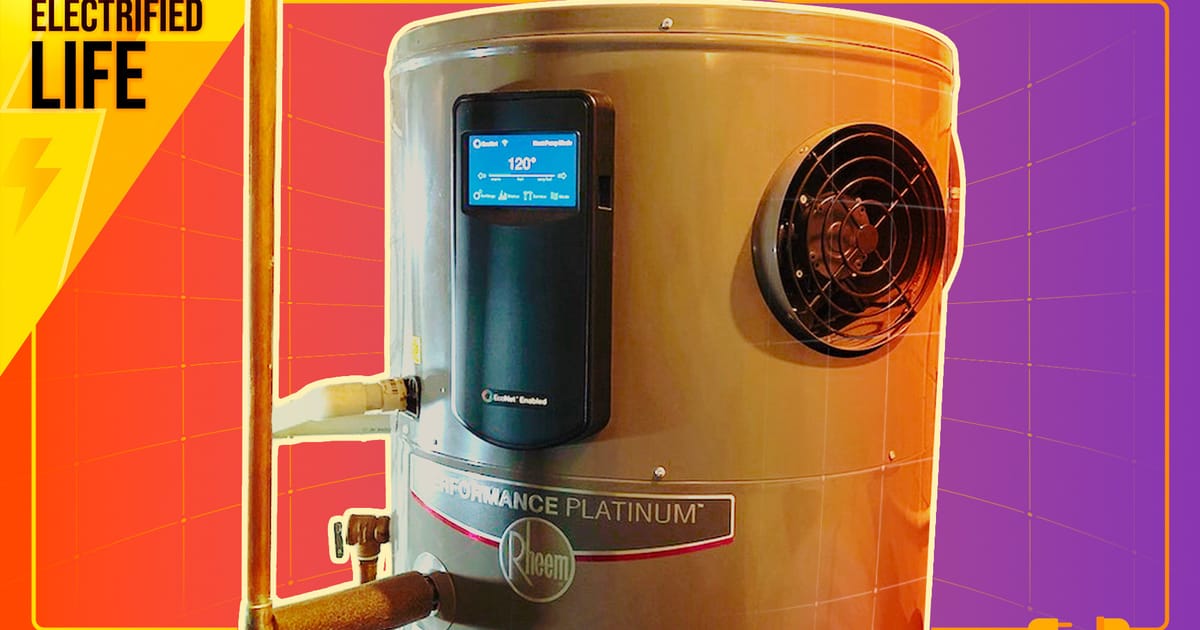
A heat pump pulls heat from the ambient air and accumulates it in the tank, unlike a conventional water heater which uses combustion or a resistance heater to generate the heat from an energy source. That is why heat pumps are generally much more efficient than other types of water Heaters, including on-demand Heaters which have a very high instantaneous load.
Heat pumps do have their weaknesses though, specifically they lose efficiency the colder the ambient temperature is, so if you live in the arctic circle this might not be the technology for you.
Can confirm, I hooked up an electric on demand for the time it takes for a single shower, it was stupidly expensive. It used way more power than a tank would to deliver hot water in a weeks time (math is fun). I boxed that pos back up and plan to sell it.
Heat pumps lose efficiency far above arctic temperatures. Below 40F, the efficiency drops quickly. Also, a heat pump water heater doesn’t do all the heating itself. It still uses an electric coil to get to the desired temps.
I personally would like to switch to on demand due to the space savings. Having a tank take up space in my garage is annoying.
Yes we actually can’t even run our heat pump mini-split below 40, it runs too many defrost cycles and can’t heat the room. We installed a wood pellet stove to use for those temps.
It’s a Carrier 38MARB Performance Heat Pump, and it SAYS it’s rated at 100% efficiency down to 5 deg F but I can tell you from experience that it starts buckling below freezing. I have monitored it over a whole winter season and when we hit the 20s it starts running defrost cycles every 15-20 minutes. Each cycle takes about 5-10 minutes to defrost. It’s not able to keep the room warm.
Granted, this is a 500 sq ft room with a wide opening to the next room and a 25’ ceiling. I don’t think it was a great use-case for heating in general. For cooling, this thing is irreplaceable. It barely breaks a sweat and uses almost no energy, while keeping the room at any low temperature I set it to. I’ve yet to see it have any issues cooling, even when it’s 90F and humid outside.
A tankless needs to heat water extremely quickly, which needs a lot more energy. More energy than you can get out of electric heat for a whole house, so most of them are gas.
I guess you might be able to put a bunch of small electric tankless heaters at each hot water tap, but that’s a lot more electrical work and points of failure.
That, and each one of those tankless heaters requires its own dedicated 15 or 20 amp circuit so if you install a shitload of them all over the house you’re going to fill up your breaker panel really quickly.
In my case, the heat pump is in the basement. So in the summer it’s great. It dehumidifies and cools the basement. However in the winter, it’s still cooling the basement. So the gas furnace kicks on to heat the basement back up. There’s a push-pull there.
However, I have solar, and an excess of electricity credits from it.
So what I’ve done is put it in high-demand mode which uses more electricity and less heat pump, reducing the push-pull issue.
In the summer I’ll put it back in pure heat pump mode.


Tankless is crazy LESS energy efficient than a tank heat pump water heater. Why? In tankless you’re having to CREATE THE HEAT. With heat pump tank you don’t. You’re citing the inefficiency of storing a tank of hot water, but the insulation on a decent (not garbage) hot water heater is really really good! The heat loss through the insulation is VERY small. You could turn off the water heater entirely and come back days or possibly weeks later and the water is still hot.
As older millennial too who has worked on the house allot this is true, pilot been off while working on shit and can still get a few hot showers in for days of sparing use with water in that tank even if the heat source was stone dead.
I assume that the person above is referring to a natural gas tank system and not a heat pump tank system.
That all being said, this is something that the department of energy has studied. Depending upon household use, a tankless option can be much more energy efficient.
Here is a gas tank system compared to a gas tankless
https://www.energy.gov/eere/buildings/articles/tankless-gas-water-heater-performance-building-america-top-innovation
It’s even more efficient to produce hot water at the point of use with a water heating fixture than a centralized water heater. There is no energy loss in storage or a lengthy journey through pipes (which are also usually uninsulated), and you can also directly heat water to the temperature you want instead of wasting energy mixing hot and cold water to cool it back down. You also get truly instant hot water with them. They’re fairly common in Europe and Asia which have 240v electricity (also because a lot of those homes predate mass availability and adoption of domestic hot water in the region so they had to retrofit). Sadly the North American electrical system is too dinky to handle that.
You still have to create the heat for a water tank, too …
A heat pump pulls heat from the ambient air and accumulates it in the tank, unlike a conventional water heater which uses combustion or a resistance heater to generate the heat from an energy source. That is why heat pumps are generally much more efficient than other types of water Heaters, including on-demand Heaters which have a very high instantaneous load.
Heat pumps do have their weaknesses though, specifically they lose efficiency the colder the ambient temperature is, so if you live in the arctic circle this might not be the technology for you.
Can confirm, I hooked up an electric on demand for the time it takes for a single shower, it was stupidly expensive. It used way more power than a tank would to deliver hot water in a weeks time (math is fun). I boxed that pos back up and plan to sell it.
Heat pumps lose efficiency far above arctic temperatures. Below 40F, the efficiency drops quickly. Also, a heat pump water heater doesn’t do all the heating itself. It still uses an electric coil to get to the desired temps.
I personally would like to switch to on demand due to the space savings. Having a tank take up space in my garage is annoying.
Yes we actually can’t even run our heat pump mini-split below 40, it runs too many defrost cycles and can’t heat the room. We installed a wood pellet stove to use for those temps.
Wow, what model do you have?
It’s a Carrier 40MAHB
Ah… what about the outdoor unit? Do you have a high heat model?
It’s a Carrier 38MARB Performance Heat Pump, and it SAYS it’s rated at 100% efficiency down to 5 deg F but I can tell you from experience that it starts buckling below freezing. I have monitored it over a whole winter season and when we hit the 20s it starts running defrost cycles every 15-20 minutes. Each cycle takes about 5-10 minutes to defrost. It’s not able to keep the room warm.
Granted, this is a 500 sq ft room with a wide opening to the next room and a 25’ ceiling. I don’t think it was a great use-case for heating in general. For cooling, this thing is irreplaceable. It barely breaks a sweat and uses almost no energy, while keeping the room at any low temperature I set it to. I’ve yet to see it have any issues cooling, even when it’s 90F and humid outside.
A tankless needs to heat water extremely quickly, which needs a lot more energy. More energy than you can get out of electric heat for a whole house, so most of them are gas.
I guess you might be able to put a bunch of small electric tankless heaters at each hot water tap, but that’s a lot more electrical work and points of failure.
That, and each one of those tankless heaters requires its own dedicated 15 or 20 amp circuit so if you install a shitload of them all over the house you’re going to fill up your breaker panel really quickly.
Hell some of them take two or three 40A breakers
Conversion of electricity to heat is 100% efficient.
Heat pumps can achieve an efficiency of over 100%
Not if it’s using a heat pump
In my case, the heat pump is in the basement. So in the summer it’s great. It dehumidifies and cools the basement. However in the winter, it’s still cooling the basement. So the gas furnace kicks on to heat the basement back up. There’s a push-pull there.
However, I have solar, and an excess of electricity credits from it.
So what I’ve done is put it in high-demand mode which uses more electricity and less heat pump, reducing the push-pull issue.
In the summer I’ll put it back in pure heat pump mode.