

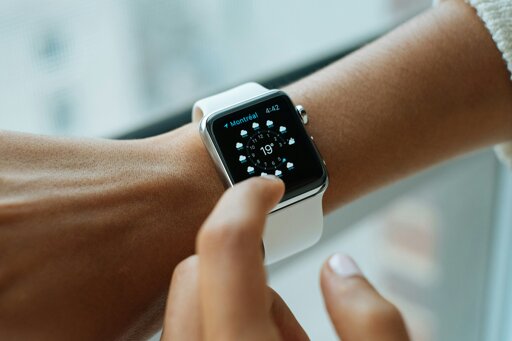
The latest Apple Watch models have some new features: they can listen to the sounds around you all day, transcribe snippets of conversation on demand and write up summaries of everything they heard.
The new features may run into problems with privacy laws, particularly those that require consent from people being recorded, but also with unspoken social conventions about speech.
When we talk with other people, we have some expectations about what happens to our words. Our comfort comes from what information scientist Helen Nissenbaum calls contextual integrity: the expectation that information moves around according to the norms of the setting in which it is shared.
What you say across a cafe table, in a bathroom, at a dinner party, at a town hall meeting or during a television broadcast is said for the people present and for the purposes apparent in that moment. Until now, our ambient conversations were not said for an auto-magical summarizer to fold into someone else’s searchable life records.
Apple can encrypt, minimize and delete all it wants, but data protection isn’t the problem. The problem is that a conversation has been quietly rerouted from the room where it happened into a device, service and product.
It doesn’t matter. Wiretap laws, including federal and many state laws, don’t care if the recording is saved or even if an audio recording is created in the first place. Under the Federal Wiretap Act (18 U.S.C. § 2510(4)), an “interception” is defined as the “aural or other acquisition of the contents of any wire, electronic, or oral communication through the use of any electronic, mechanical, or other device.” Many state laws make it illegal the moment the audio is saved into an ephemeral buffer, which Apple does.