The confluence of lingering cost pressures and advancing technology appears to be translating into a boom in smaller businesses’ deploying AI-designed graphics and logos.
If I recall, in the US, anything in a food advert photo that is meant to come with the product – IE, the toppings of the burger – must be real food, and cannot be paint or such or that’s false advertising. The milk in cereal is provided by the consumer, so they can use the glue there. And while the ketchup is applied via syringe, it is, in fact, ketchup: https://www.youtube.com/watch?v=mIEhDSWXeF4
What they get away with is the arrangement of the ingredients, things like splitting and spreading a pattie to make it appear larger, fluffing the choice lettuce pieces and tomato slices, using hidden toothpicks to arrange things.
It’s possible the Japanese ad you presented isn’t food at all, and just model food, like presented in shop storefronts – looking like the real thing. That steam is definitely added after the fact. It also has a bit of a sheen in spots on the bread that makes me think it’s just plastic, but I don’t think the same “false advertising” laws apply in Japan.
Right. If you’re selling ice cream, the ice cream is ice cream. If you’re selling brownies, and there’s ice cream in the background, that ice cream is mashed potato.
They’ll also make ten burgers and pick the most photogenic one.
Not that it matters, because your burger will never look like the picture.


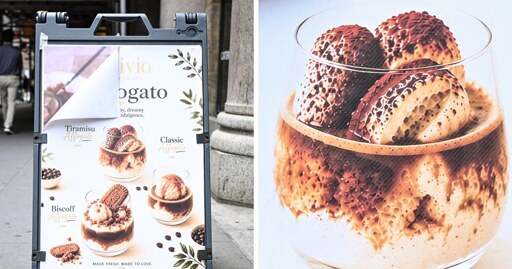
If I recall, in the US, anything in a food advert photo that is meant to come with the product – IE, the toppings of the burger – must be real food, and cannot be paint or such or that’s false advertising. The milk in cereal is provided by the consumer, so they can use the glue there. And while the ketchup is applied via syringe, it is, in fact, ketchup: https://www.youtube.com/watch?v=mIEhDSWXeF4
What they get away with is the arrangement of the ingredients, things like splitting and spreading a pattie to make it appear larger, fluffing the choice lettuce pieces and tomato slices, using hidden toothpicks to arrange things.
It’s possible the Japanese ad you presented isn’t food at all, and just model food, like presented in shop storefronts – looking like the real thing. That steam is definitely added after the fact. It also has a bit of a sheen in spots on the bread that makes me think it’s just plastic, but I don’t think the same “false advertising” laws apply in Japan.
Right. If you’re selling ice cream, the ice cream is ice cream. If you’re selling brownies, and there’s ice cream in the background, that ice cream is mashed potato.
They’ll also make ten burgers and pick the most photogenic one.
Not that it matters, because your burger will never look like the picture.