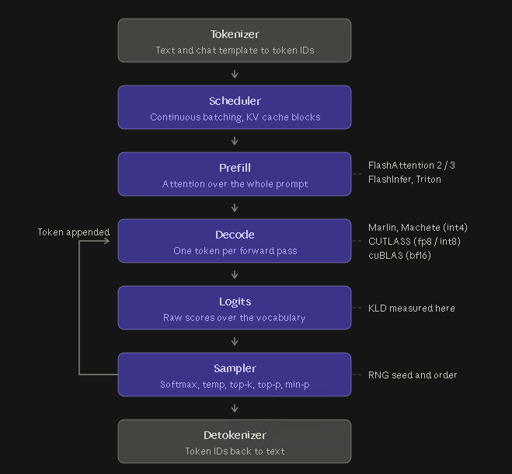
Quick Introduction We have all been on forums, chats, reddit, discord, youtube, or somewhere and heard “Oh! Model XYZ is AMAZEBALLZ!zomgwtfbbq” then downloaded it (or more likely, some quantized form of it) and said “eww… This sucks!” This post is going to be a rather technical series of experiments to demonstrate the impact of implementation-specific hazards with inference. I will be using the term “reference implementation” to describe the lab that published and offers first-party hosting of ...


Congrats, you managed to find the dictionary, but didn’t even make it to the encyclopedia, let alone the acutal literature.
And now, with just the barest of definition and no deeper knowledge on anything you think you are an expert.
Here, please read at least the wikipedia entry to get a very basic understanding about what the adults in the room are talking about: https://en.wikipedia.org/wiki/Sentience
The first sentence of this Wikipedia article literally immediately disqualifies LLMs, lmao
“Sentience is the ability to experience feelings”
Every sentence that follows continues to disqualify LLMs
If you continue down to the section on “digital sentience” you will find other sentences that directly contradict your assertions, such as ‘Indeed, leading AI textbooks do not mention “sentience” at all.‘
It’s basically 100% agreed on that there are not currently any sentient computers, and there never has been. Do some people think that we might have them one day? Yes a very small number of the experts do, but they don’t know how to get there, and they aren’t close to being there now.
The people calling their AI self aware and claiming that it took actions without their instructions (which is verifiably false) are lying to you for money.