

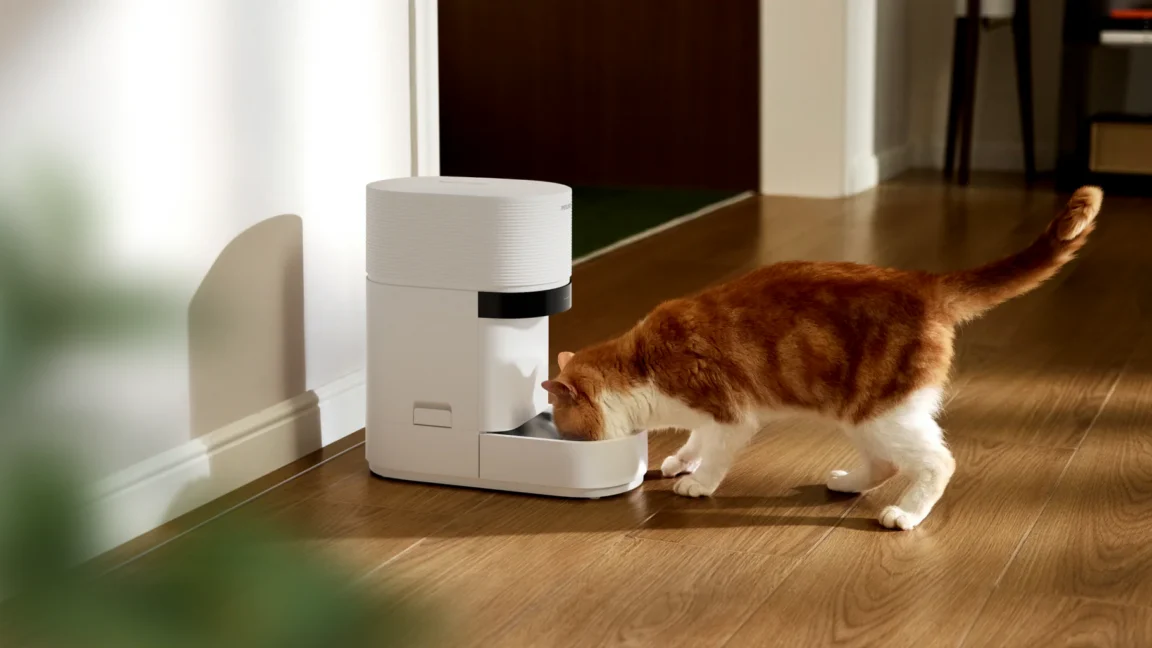
This feels like bad design
Smart pet-feeder company Petlibro suffered an outage on Tuesday, giving users a harsh reminder of the risks of relying on smart devices.
Petlibro makes pet feeders that connect to Wi-Fi and, for setup with Petlibro’s mobile companion app, Bluetooth. Users can set the feeders to automatically dispense food at scheduled times, which is handy for pet care when the owner is out of the home.
In a statement to The Verge, Petlibro CEO York Wu said this week’s outage was “related to how the Petlibro app communicates with devices through its online servers.”
Some user reports have also conflicted with Petlibro’s claims about offline functionality. As The Verge pointed out, various users online claimed that during the outage, their devices did not perform any scheduled feedings, performed some feedings but not others, or performed feedings late (examples here, here, here, here, and here).
Why in fuck would a device that activates a motor once or twice a day on a schedule need any kind of network connectivity? This is an ultra-dumb programmatic function, it shouldn’t need any more compute power than an alarm clock. Why would you hook it up to a smart home anything?
It should be exactly this complicated:
Anything beyond that is like killing a housefly with a bazooka.
Totally agree (keep it simple) and I use a simple timer failsafe on mine, but just pointing out:
Minimum interval of that plug will fill the bowl jam the motor. Gears will strip without intervention.
Nbd tho, you can wire up a secondary timer relay circuit for portion control. Just keep the wires tidy, and raised if there’s a water bowl nearby.
And probably don’t want 220 anywhere near the feeding area so use a 5v wall wart or whatever.
Eh, might also want to consider a battery backup option in case power goes out while you’re on a work trip.
Just make sure to keep both interfaces accessible for later manual adjustments. Can take a while to dial it in, you know, based on current activity levels, which can change seasonally. Also be ready to fuck with it pretty much any time you switch their feed.
Etc etc
I kid — I’m sure you get why nerdy control freaks wire these things up to HA and whatever
Gotta find one (cheap) that doesn’t do the wrrrr-tick-tick-tick 24/7 though.
The ability to play with it, without having to fiddle with tiny switches is a big feature to many. Often these are used by people with mobility issues. The ability to add an extra feed, due to exercise, or adjust the timings to account for changes in life plans are a godsend to many.
Smart home devices are a balancing act. The extra control means more can also go wrong. Minimising that is a big part. The most critical is making it behave sanely when it suddenly goes offline. E.g. smart light switches become dumb ones, when the central hub goes down.
OK, add a simple remote control with buttons for adjusting the schedule and triggering a manual feed. No need for that to be any more complicated than a TV remote from the 90s. Keep it offline, no problem.
To each their own. I prefer having the ability to adjust things from 1 central source. I’m prone to losing remotes.
Also, how would you do such a remote. You would also need a screen for feedback etc, which puts you back at square 1.
Also, a remote would be considerably more expensive than the extra cost of a ZigBee/Wifi enabled microcontroller.
My preference is for devices to be as simple and reliable and end-user repairable as possible. I have an aversion to any kind of appliance that might be dependent on someone else to update software or maintain a network service to keep operational. No software dependence at all if possible, just a basic microcontroller and firmware. Again, there’s nothing to this that needs to be any more advanced or complicated than the functions of a basic alarm clock like this:
Instead of setting off an alarm, we’re activating the feeding mechanism. Dead simple. Hell, you could probably make this yourself by wiring the alarm from a clock like this to a motor that moves the feeding mechanism.
Nah, there’s no reason feeding times need to be any more granular than per-hour. You can show that with a 2x6 grid of 12 indicator LEDs, with a 13th AM/PM indicator. On lights indicate hours when feeding will activate. You could have that on both the remote and the feeder, cheap and easy. Maybe you have a 14th indicator that lights up if the food in the storage bin is low and needs refilling.
Definitely not, because it’s not fair to count the cost of only the link hardware on the feeder, you have to account for the cost of the rest of the smart home system to operate it. A remote like this is dirt cheap:
You’re over thinking what this really needs to do. It’s a timer that activates a switch, that’s all.
It’s worth noting that I think both should exist.
Agreed, I just want a ZigBee endpoint as well.
As for the smart home stuff, I already have it in place, so it’s no additional expense.
Control wise, your method would be fine for someone techie and motivated. It would annoy the hell out of some non techies, particularly if they had vision issues (think OAP). It would also close down the option of relatives helping out by monitoring it remotely.
As I said, different target audiences. Both have their places. I just wish the smart option did its job properly, rather than the half baked options we keep getting.