AGPL can be closed too, the license bases the right to the source based on the access to the end product:
GPLv2/v3 - if you have the binary executable output of the GPLv2/3 covered source, you must be granted access to the exact source used to make the binary. This applies to legitimately sourced binaries only - if you were to hack into a company’s servers and get a binary of a modified GPL product, this wouldn’t apply. But extracting a binary from a device you own IS a legitimate access (so e.g. if your phone uses U-boot, the manufacturer must grant you access to their modified U-Boot sources used to build the bootloader)
AGPL - if you have (legitimate) access to a service you can request the source. This is so e.g. web services can be made into GPLed code where modifications must be released (negating the requirement of possession of a binary, since you can’t possess a binary that runs on a remote server). e.g. let’s say I run GTK app via browser using kasmVNC - if the app is GPL, I don’t have to provide the source, if it’s AGPL, I have to provide the source.
I’ve managed to force multiple Chinese companies to release sources that were adamant they don’t have to, just by threatening to report them to the FSF and SFC - both bodies have been wildly successful in prosecuting licence breaches.
Also both the EU and the US have now precedents and laws in place that allow fast-tracking obvious licence violators’ blocking from the market. For a small Chinese company whose main target market is the west, it’s a major blow if their sales and export are blocked because they won’t release the source.
So they try to play hardball, but it’s like modern lifts - the moment you press the right buttons suddenly they do exactly what you want them to.
I remember this happening to Linksys with the WRT-54g routers. They shipped with firmware based on open software (I don’t remember the exact license) and they were brought to court and forced to release the source code.
In the end it really helped the sales of that model because hobbyists wanted it for the freedom of running their own code on it.
oh yeah i remember that. pretty sure that was gpl.
this is sort of a predecessor to that situation thus far: bambu is obviously in the wrong with regards to not handing out gpl’ed source, but they are in their full right to refuse handing out stuff they’ve built on top. so the question then is, is rossman in the clear for having taken their source code? if he has bought one of their printers (most likely) it’s pretty cut and dry, but if he took the code from somewhere else he has technically stolen it and the license does not apply. at least that’s my read.
The GPL applies to code built on top of GPL code, this is the viral nature of the GPL.
Anyone with a GPL license for the code can license anyone else, it does not have to come from the original creator. So Rossmann has a license granted by the creator of the fork. Also the source that Bambu Lab provide on GitHub provides a license as well.
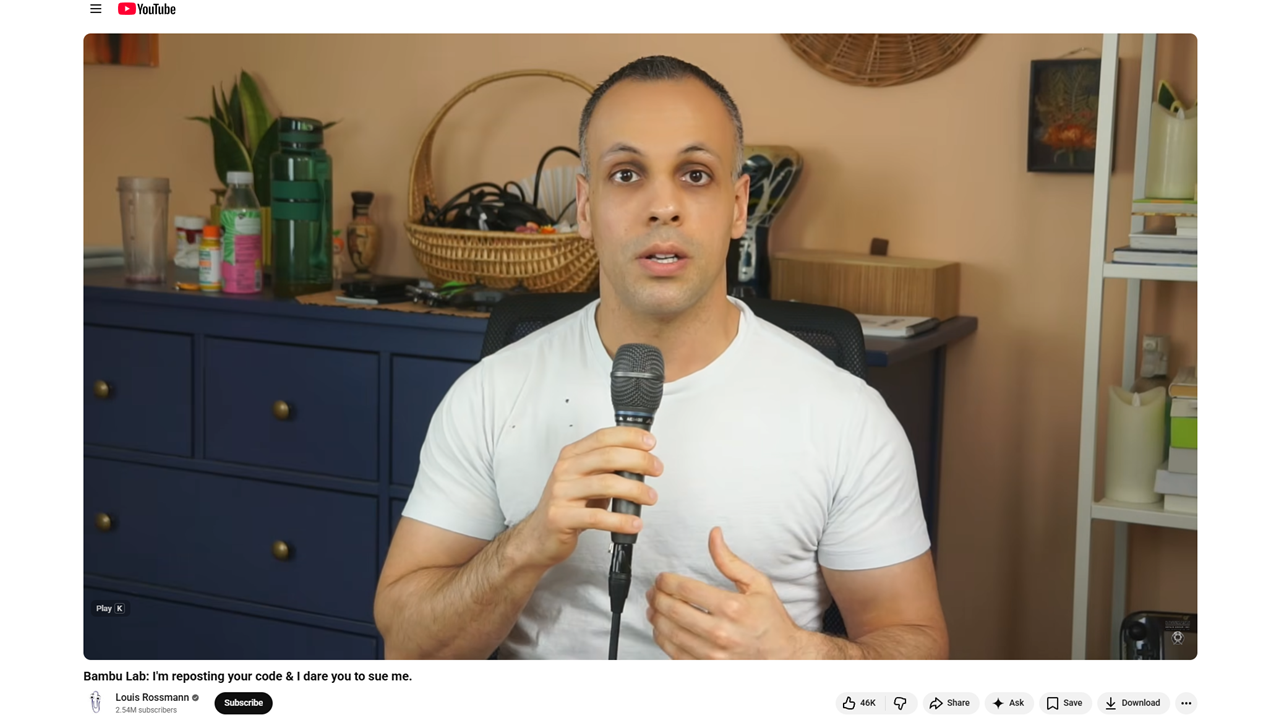
Rossmann has only reuploaded the slicer fork, not any firmware (the article title is inaccurate). But yes, the slicer’s AGPL license does not apply to the firmware.


AGPL can be closed too, the license bases the right to the source based on the access to the end product:
GPLv2/v3 - if you have the binary executable output of the GPLv2/3 covered source, you must be granted access to the exact source used to make the binary. This applies to legitimately sourced binaries only - if you were to hack into a company’s servers and get a binary of a modified GPL product, this wouldn’t apply. But extracting a binary from a device you own IS a legitimate access (so e.g. if your phone uses U-boot, the manufacturer must grant you access to their modified U-Boot sources used to build the bootloader)
AGPL - if you have (legitimate) access to a service you can request the source. This is so e.g. web services can be made into GPLed code where modifications must be released (negating the requirement of possession of a binary, since you can’t possess a binary that runs on a remote server). e.g. let’s say I run GTK app via browser using kasmVNC - if the app is GPL, I don’t have to provide the source, if it’s AGPL, I have to provide the source.
are you sure about that first one? yes they have to give you the source, but what happens if they don’t? i’ve genuinely not thought about that before.
That’s where legal actions come into place.
I’ve managed to force multiple Chinese companies to release sources that were adamant they don’t have to, just by threatening to report them to the FSF and SFC - both bodies have been wildly successful in prosecuting licence breaches.
Also both the EU and the US have now precedents and laws in place that allow fast-tracking obvious licence violators’ blocking from the market. For a small Chinese company whose main target market is the west, it’s a major blow if their sales and export are blocked because they won’t release the source.
So they try to play hardball, but it’s like modern lifts - the moment you press the right buttons suddenly they do exactly what you want them to.
I remember this happening to Linksys with the WRT-54g routers. They shipped with firmware based on open software (I don’t remember the exact license) and they were brought to court and forced to release the source code.
In the end it really helped the sales of that model because hobbyists wanted it for the freedom of running their own code on it.
oh yeah i remember that. pretty sure that was gpl.
this is sort of a predecessor to that situation thus far: bambu is obviously in the wrong with regards to not handing out gpl’ed source, but they are in their full right to refuse handing out stuff they’ve built on top. so the question then is, is rossman in the clear for having taken their source code? if he has bought one of their printers (most likely) it’s pretty cut and dry, but if he took the code from somewhere else he has technically stolen it and the license does not apply. at least that’s my read.
You aren’t understanding the GPL correctly.
i’m using “on top” rather flippantly here, since orca is AGPL. but bambu may also have separate code running on the machines that is not agpl.
Rossmann has only reuploaded the slicer fork, not any firmware (the article title is inaccurate). But yes, the slicer’s AGPL license does not apply to the firmware.
well then. my argument is moot.