

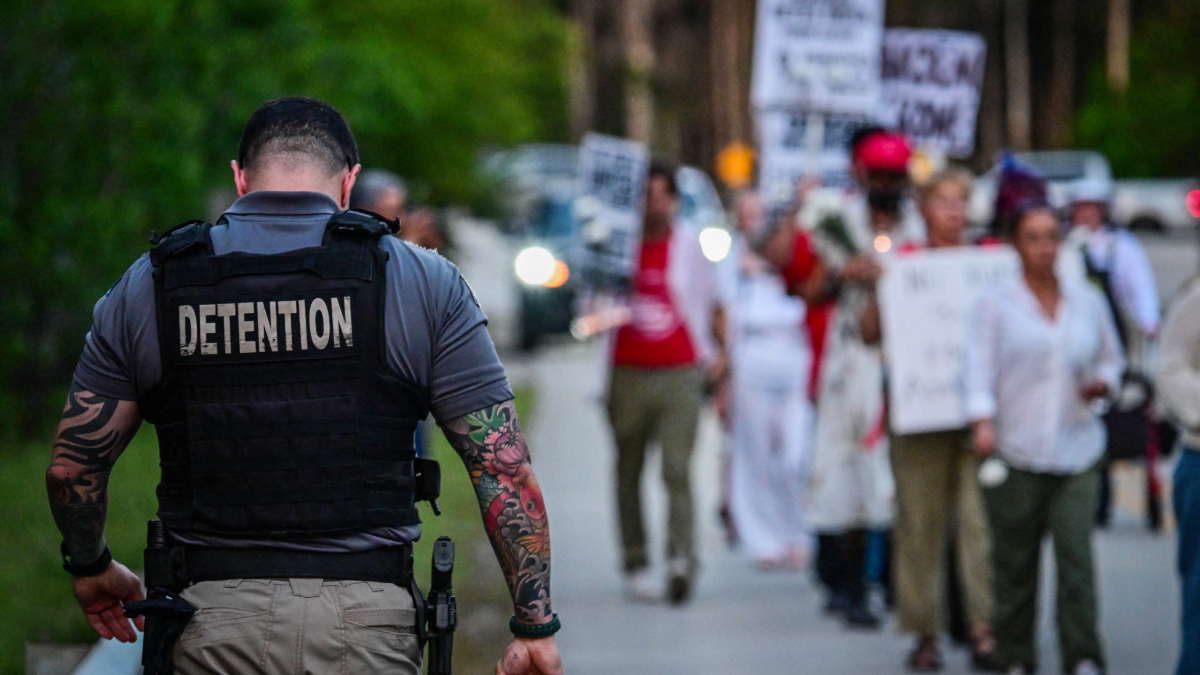
The killing of Renee Nicole Good and Alex Pretti by federal agents in Minneapolis last month seemed to mark a breaking point for the United States on immigration enforcement. But rather than lowering tensions, the government appears intent on cranking the temperature up. President Donald Trump framed Good’s killing as the price of being “disrespectful of law enforcement” and described Pretti as an “agitator” and “insurrectionist.” White House Deputy Chief of Staff Stephen Miller described Pretti as a “domestic terrorist” and “would-be assassin" (claims Vice President Vance amplified) while labeling broader protests as an “insurgency.”
The administration isn’t just criticizing anti-ICE protesters and observers; it is treating their conduct as criminal. Department of Homeland Security (DHS) Secretary Kristi Noem has claimed that merely filming ICE agents constitutes an act of violence, despite the fact that filming police is not only legal, it is a constitutionally protected right. DHS Assistant Secretary for Public Affairs Tricia McLaughlin has labeled recording ICE personnel as “doxing” subject to prosecution, while a DHS statement described filming agents as "obstruction of justice,” threatening that “we will hunt you down and you will be prosecuted.” Border Patrol commander Greg Bovino, who was removed from his position following Pretti’s killing, has said protesters could be arrested for making “hyperbolic” comments about immigration officers. A DHS bulletin to personnel lists “use of cameras,” “livestreaming,” and filming agents among “unlawful civil unrest” tactics.
These are not idle threats: As the Cato Institute’s David J. Bier has documented, there is a growing trend of ICE and Border Patrol agents threatening observers who film them with arrest for illegally “impeding” operations. Over the last month, the Department of Justice pushed efforts to investigate Good’s widow for activist ties and launched a criminal probe against Minnesota Governor Tim Walz and Minneapolis Mayor Jacob Frey, both Democrats, for criticizing ICE operations.
Americans should brace for broader investigation and persecution of those who document and criticize immigration enforcement, fueled by an array of powerful surveillance technologies and tools. But they can also take actions to protect their privacy rights.
Yup looking into. Small things can be effective.